
When you buy through links on our articles, Future and its syndication partners may earn a commission.

We've all had the thought — wouldn't it be nice if summer were just a little longer? Well, it might become a reality in the not-too-distant future. And, unfortunately, that's not a good sign for our planet.
According to a new study, climate change — primarily driven by human activities like burning coal for cheap power — could lengthen summers in Europe by 42 days by the year 2100. That's because the "latitudinal temperature gradient" (LTG), or the temperature difference between the North Pole and the equator, is currently decreasing. A higher LTG drives wind patterns across the Atlantic Ocean, bringing about seasonal temperature changes in Europe. With a lower LTG, summer weather patterns and heat waves will last longer across the continent.
"Our findings show this isn't just a modern phenomenon; it's a recurring feature of Earth’s climate system. But what's different now is the speed, cause and intensity of change," Dr. Laura Boyall, an author of the study, said in a statement."
To peer back into Earth's climate history in Europe, researchers analyzed layers of mud at the bottom of lakes. Deposited seasonally, these sediments paint a clear timeline of winters and summers as far back as 10,000 years ago.
Around 6,000 years ago, European summers were about eight months long due to natural fluctuations in the LTG. But now, the Arctic is warming up to four times faster than the global average, in part due to greenhouse gas emissions. For every degree Celsius the LTG decreases, European summers will grow by about six days. Thus, according to current climate projections, Europe will have 42 extra days of summer by 2100.
"Our research has uncovered that European seasons have been driven by the temperature gradient over thousands of years, which provides useful insight that can be used to help predict future changes more accurately," says Dr. Celia Martin-Puertas, lead researcher from Royal Holloway at the University of London. "The findings underscore how deeply connected Europe’s weather is to global climate dynamics and how understanding the past can help us navigate the challenges of a rapidly changing planet."
A study on the research was published on Nov. 19 in the journal Nature Communications.

A powerful geomagnetic storm created a series of brilliant auroras recently for observers across North America.

The images reveal the storm's incredible power and offer vital insights into how such hurricanes form.

This satellite image reveals not only geological beauty but also the deep ties between landscape, climate and history in one of the world's driest deserts.
LATEST POSTS
- 1
 Conquering Social Generalizations: Individual Accounts of Strengthening
 - 2Israeli media reports Iran attacking greater Tel Aviv region
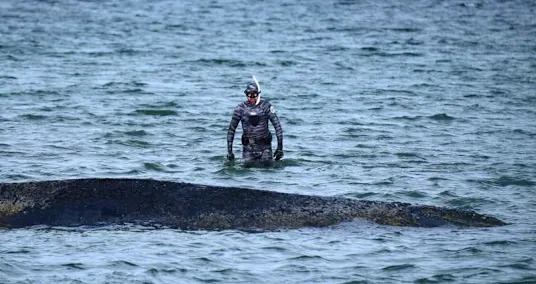
- 3Rescuers again fail to free whale stranded on Germany's Baltic coast
- 4CDC vaccine panel votes to remove universal hepatitis B birth dose recommendation
- 5Wegovy maker Novo sharpens consumer focus with board role for Mars CEO




- 4 astronauts depart ISS, leaving behind just 3 crewmates to staff the orbiting lab
- Doritos and Cheetos dial back the bright orange in new versions without artificial ingredients
- Cheetos and Doritos to launch new versions without artificial dyes
- 7 Peculiar Ways Of starting Your Imagination: Motivation Has Never Been This Good times
- Woman charged in unprovoked stabbing of tourist changing baby's diaper in Macy’s Herald Square store
- Civil rights leader Jesse Jackson hospitalized, family requests prayers
- The Developing Nearby Food Development and Its Advantages
- See the famous winged horse Pegasus fly in the autumn night sky
- Vote In favor of Your Favored Web-based Book Retailor


